

Yoga and Massage Therapy: Why They Work So Well Together
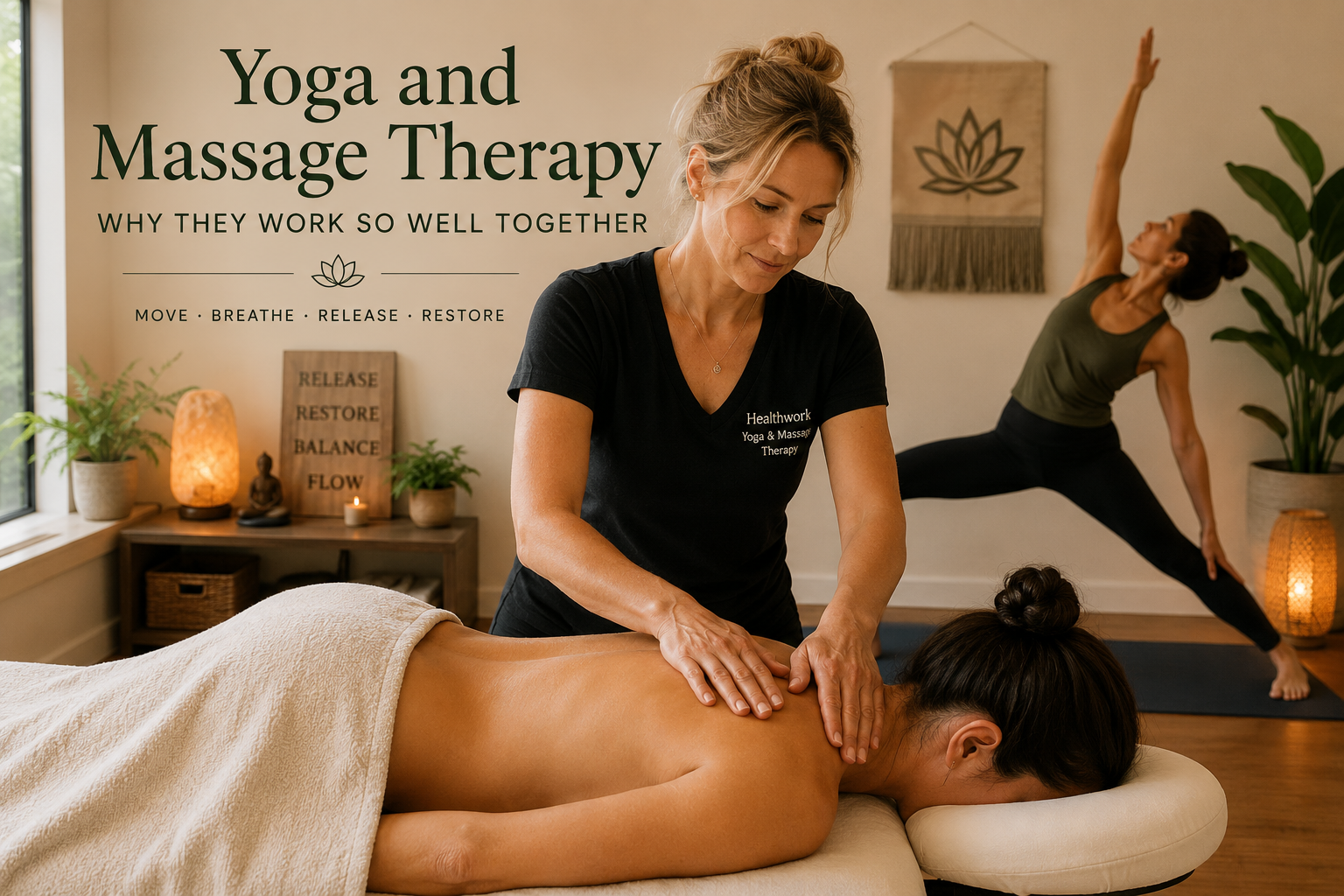
Yoga and massage therapy working together for wellness at Healthwork in Albuquerque, New Mexico
Yoga and Massage Therapy: Why They Work So Well Together
Massage therapy and yoga are often thought of as two separate approaches to wellness, but they can complement one another beautifully. Massage provides hands-on work that can help ease muscular tension and encourage relaxation, while yoga uses movement, stretching, breathing, and body awareness to help maintain mobility and create greater awareness of how the body moves and feels.
For people who enjoy both, combining massage therapy and yoga can create a more complete approach to caring for the body.
Massage Therapy Can Help Release Areas of Tension
Muscles can become tight for many reasons, including repetitive movements, prolonged sitting, physical activity, stress, and everyday habits. Massage therapy allows a therapist to work directly with areas of muscular tension and restriction.
After a massage, many people notice that movement feels easier or that they are more aware of where they have been holding tension.
Yoga Helps Bring Movement Back Into the Body
Yoga approaches the body differently. Instead of receiving hands-on work, you actively move through positions while paying attention to breathing, alignment, balance, strength, and mobility.
A thoughtful yoga practice can help you explore your available range of motion and become more aware of patterns such as favoring one side, holding unnecessary tension, or moving differently through one hip or shoulder.
Together, They Can Complement Each Other
This is where massage therapy and yoga can work especially well together.
Massage may help reduce muscular tension and encourage relaxation, while yoga provides an opportunity to move, stretch, strengthen, breathe, and develop greater body awareness between massage sessions.
Neither needs to replace the other. Instead, they can serve different purposes within an overall wellness routine.
Combining Yoga and Massage Therapy in Albuquerque
At Healthwork Yoga & Massage Therapy in Albuquerque, massage therapy and yoga are offered within the same practice.
Our massage therapy services include therapeutic and deep tissue approaches, while our yoga offerings range from beginner-friendly instruction to classes designed to develop mobility, strength, relaxation, and greater body awareness.
For someone who isn't sure where to begin, the choice doesn't have to be massage or yoga. Depending on your goals, incorporating both may provide a well-rounded approach to movement, relaxation, and ongoing self-care.
Which Should You Do First — Yoga or Massage?
There isn't one answer that is right for everyone.
Gentle yoga before a massage may help warm the body and bring awareness to areas that feel restricted. At other times, receiving massage first and practicing yoga later may feel more appropriate.
The best approach depends on your body, your goals, and how you feel that particular day.
A More Connected Approach to Wellness
One of the greatest benefits of combining yoga and massage therapy is that both encourage you to pay attention to your body.
Massage offers the opportunity to slow down and receive therapeutic touch, while yoga gives you tools you can continue using through movement and breathing.
Together, they can become complementary parts of a thoughtful wellness routine rather than isolated treatments.
Healthwork Yoga & Massage Therapy serves Albuquerque, New Mexico, with professional massage therapy and yoga instruction.
Sources & Further Reading
1. National Center for Complementary and Integrative Health (NCCIH) — Massage Therapy
This directly supports your discussion of massage as a wellness practice and its use for pain and soft-tissue work.
Massage Therapy: What You Need to Know
2. NCCIH — Yoga: Effectiveness and Safety
A particularly good match for your article because it discusses yoga's potential benefits for stress, balance, general wellness, physical function, and some types of pain.
Yoga: Effectiveness and Safety
3. NCCIH — Yoga for Pain
Useful for supporting the portions of your article dealing with movement, function, mobility and the role yoga can play for people experiencing musculoskeletal discomfort.
Yoga for Pain: What the Science Says
4. NCCIH — Mind and Body Practices
This one fits the broader philosophy of your article very nicely: physical and mind-body approaches can play different but complementary roles in health and wellness.
Mind and Body Practices