

Can Living with a Cat Improve Your Health?
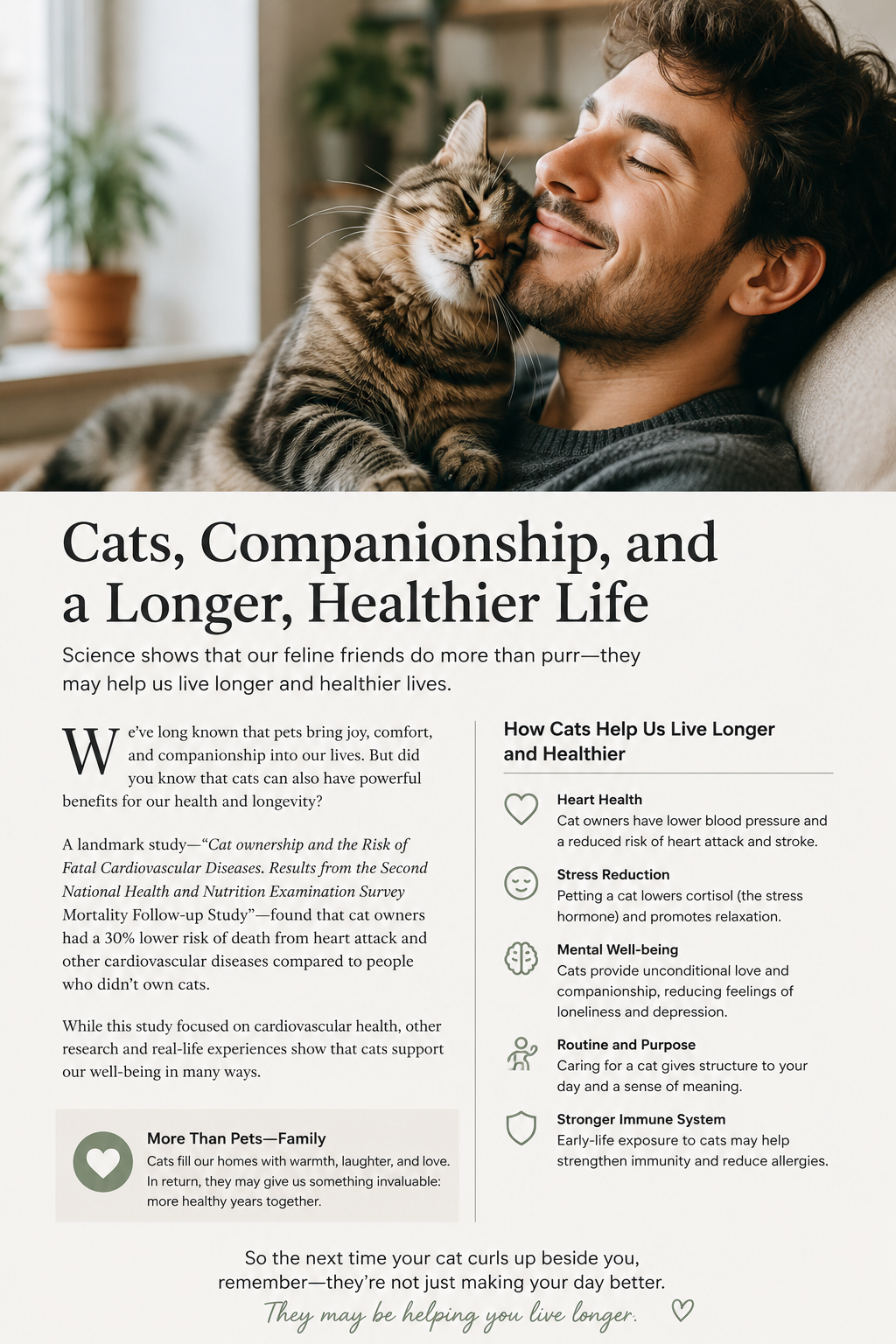
"Wellness comes in many forms—sometimes it is found in a yoga practice, sometimes in a massage, and sometimes in the gentle purr of a beloved cat." 🐈💜🐾
"At Healthwork Yoga & Massage Therapy, we believe that health is influenced not only by nutrition, movement, and self-care, but also by the relationships we cultivate—including the special bond we share with our animal companions."
For centuries, cats have shared our homes, our couches, and often our hearts. While many cat lovers already know how comforting it feels to have a feline companion curled up beside them, science is beginning to reveal something even more remarkable: cats may actually help us live longer and healthier lives.
Most people are familiar with the health benefits associated with dogs—daily walks, increased physical activity, and social engagement. But cats offer a different kind of medicine. Their quiet companionship, calming presence, and affectionate nature may provide profound benefits for both the body and mind.
What Does the Research Say?
One of the most frequently cited studies on this topic is Cat Ownership and the Risk of Fatal Cardiovascular Diseases: Results from the Second National Health and Nutrition Examination Study Mortality Follow-up Study.
Researchers found that people who had owned cats experienced a significantly lower risk of death from heart attacks and other cardiovascular diseases compared to individuals who had never owned cats. The findings suggested that cat ownership was associated with approximately a 30% reduction in the risk of death from heart attack.
While researchers cannot say that cats alone prevent heart disease, the study suggests that the emotional and physiological benefits of living with a cat may contribute to better long-term health.
Cats Help Reduce Stress
One of the most immediate benefits of spending time with a cat is stress reduction.
Have you ever noticed how calming it feels to stroke a cat's soft fur while listening to its gentle purr? Studies have shown that interacting with animals can lower cortisol—the body's primary stress hormone—while increasing the release of oxytocin, often called the "bonding hormone."
Lower stress levels may contribute to:
Reduced blood pressure
Improved cardiovascular health
Better immune function
Improved sleep quality
Greater emotional resilience
In today's fast-paced world, a cat's ability to encourage us to slow down may be one of its greatest gifts.
The Healing Power of Purring
Cats purr for many reasons, but researchers have long been fascinated by the frequency of a cat's purr, typically ranging between 25 and 150 Hertz.
Interestingly, frequencies within this range have been associated with tissue healing, bone growth, pain reduction, and muscle recovery in various medical studies. While more research is needed, some scientists speculate that exposure to a cat's purr may have subtle therapeutic effects on the human body.
Whether or not the purr itself is healing, there is little doubt that it creates a powerful sense of comfort and relaxation.
Fighting Loneliness and Supporting Mental Health
Loneliness has become a major public health concern, particularly among older adults. Research consistently shows that social isolation can negatively affect both mental and physical health.
Cats provide companionship without demanding constant attention. They offer affection, routine, and a sense of connection that can help reduce feelings of loneliness and depression.
For many people, a cat becomes a trusted friend—one who listens without judgment, offers comfort during difficult times, and greets them each day with familiar affection.
Cats Give Us Purpose
Caring for another living being creates structure and meaning in our lives.
Feeding a cat, cleaning a litter box, scheduling veterinary visits, and engaging in play all provide a sense of responsibility and routine. These daily activities may seem small, but they help reinforce healthy habits and a sense of purpose.
Purpose itself has been linked to improved health outcomes and greater longevity.
A Quiet Path to Wellness
Unlike dogs, cats don't require daily walks or trips to the park. Their contribution to health is often more subtle.
Cats teach us to be present.
They remind us to rest in a sunny spot, appreciate a quiet moment, and find comfort in simple pleasures. In many ways, cats embody mindfulness naturally. Spending time with them often encourages us to do the same.
More Than Pets—Family
For cat lovers, these findings are hardly surprising.
Anyone who has shared life with a cat knows that they bring warmth, laughter, comfort, and unconditional companionship. While no pet can guarantee a longer life, growing evidence suggests that our feline friends may support healthier hearts, calmer minds, and happier lives.
So the next time your cat curls up beside you, begins to purr, or gently rubs against your leg, remember: they may be doing more than simply asking for attention.
They might just be helping you live a longer, healthier life.
Sources & Further Reading
1. CDC — Cats and Human Health
This is an excellent general source specifically about cats. The CDC notes that cats can provide emotional support, improve mood, and provide companionship, including benefits for older adults.
Cats — Healthy Pets, Healthy People (CDC)
2. PubMed — Companion Animals and Health in Older Adults
This systematic review looked at 70 studies. Most reported positive contributions to mental and/or physical health, including quality of life, loneliness-related factors, anxiety and some cardiovascular measures, while the researchers also emphasize that better-controlled studies are needed.
Companion Animals and Health in Older Populations: A Systematic Review — PubMed
3. PubMed — Cat Ownership and Cardiovascular Mortality
This one is particularly interesting for your article because it specifically studied cat ownership. In a long-term observational study, past cat ownership was associated with a lower risk of death from myocardial infarction. Importantly, it's an association and doesn't prove that cats caused the reduction.
Cat Ownership and the Risk of Fatal Cardiovascular Diseases — PubMed
4. PubMed — Pet Ownership, Cardiovascular Risk and Mortality
This systematic review and meta-analysis examined multiple studies of pet ownership and cardiovascular outcomes. It found associations between pet ownership and cardiovascular survival, including an association between cat ownership and lower cardiovascular mortality, although it did not find lower overall mortality specifically among cat owners.
Association Between Pet Ownership and Cardiovascular Risks and Mortality — PubMed
~ Tone Jackson (Sankari)
Owner, Healthwork Yoga and Massage Therapy
About the Author
Tone Jackson is a Licensed Massage Therapist and Certified Yoga Teacher with more than 30 years of experience helping people reduce pain, improve mobility, and restore balance through therapeutic massage and yoga. Through the Healthwork Yoga & Massage Therapy blog, she shares practical information to help people better understand their bodies and make informed decisions about their health and well-being.
Have questions or would like to schedule an appointment? I'd be happy to help. Call today to learn more about massage therapy, private yoga instruction, or to schedule a session — (505) 235-8032