

Why Do My Shoulders Tighten Up Again After Only a Few Days?
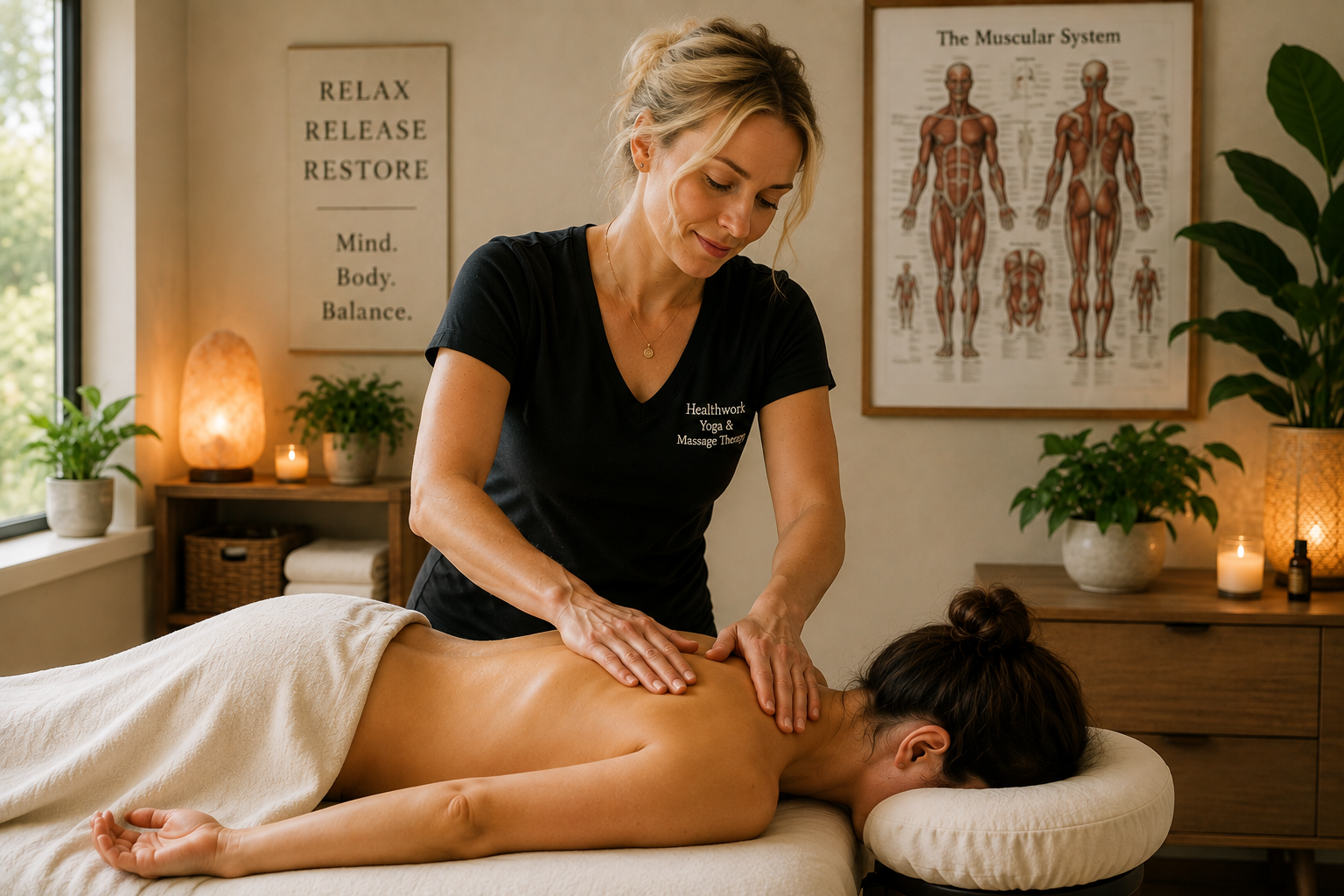
One of the most common questions I hear from clients is:
"I felt wonderful after my massage. Why are my shoulders tight again only a few days later?"
It is a great question, and the answer is often more complex than simply having "tight muscles."
Massage therapy is highly effective at reducing muscle tension, improving circulation, decreasing pain, and helping the nervous system relax. However, if the underlying cause of the tension remains unchanged, the body often returns to its old patterns.
Your Body Remembers Your Habits
Our muscles adapt to what we do every day.
If you spend hours working at a computer, looking down at a phone, driving, carrying children, or performing repetitive tasks, your body gradually begins to accept those positions as "normal."
Over time, these postural habits can place extra stress on the neck, shoulders, and upper back. Certain muscles become overworked while others become weaker and less active.
The result is a cycle of tension that keeps returning.
Tight Muscles Are Often Working Too Hard
Many people assume that the muscles that feel tight are the problem.
In reality, those muscles may actually be working overtime to compensate for weaker muscles elsewhere.
For example:
Weak muscles between the shoulder blades can make the upper trapezius work excessively.
Poor endurance of the deep neck muscles can place more strain on the larger muscles of the neck and shoulders.
Limited movement in the upper back can force the shoulders and neck to compensate.
Weakness in the core or shoulder stabilizers can alter posture throughout the entire upper body.
In these situations, repeatedly relaxing the tight muscles helps—but it doesn't completely solve the problem.
Why Physical Therapy Can Make a Difference
When pain or muscle tightness keeps returning despite regular massage, a physical therapy evaluation may be extremely helpful.
A physical therapist can identify movement patterns that may be contributing to your discomfort and determine whether there are weaknesses, joint restrictions, or muscle imbalances that should be addressed.
Treatment may include:
Strengthening weaker muscles
Improving shoulder stability
Increasing mobility where movement is limited
Teaching proper posture and body mechanics
Prescribing specific home exercises designed for your condition
As strength, stability, and movement improve, many people notice that the muscle tension returns less frequently.
Massage Therapy and Physical Therapy Can Work Together
Rather than viewing massage therapy and physical therapy as separate treatments, I often think of them as complementary.
Massage therapy can:
Reduce muscle guarding
Improve circulation
Increase tissue mobility
Decrease pain
Help you move more comfortably
Physical therapy can:
Improve strength
Restore stability
Correct movement dysfunction
Address the underlying mechanical cause of recurring pain
Together, they can often provide better long-term results than either approach alone.
Small Daily Habits Matter
Recovery doesn't only happen during appointments.
Simple changes throughout your day can make a remarkable difference, including:
Taking short movement breaks every 30–60 minutes
Adjusting your workstation ergonomics
Stretching tight muscles regularly
Strengthening postural muscles
Practicing good lifting mechanics
Maintaining a regular exercise routine
These small habits help your body maintain the benefits you gain from massage therapy.
Taking One Step Forward... Then One Step Back
I often explain it this way to my clients:
Receiving a massage therapy session is like taking a step forward. The muscles relax, pain decreases, movement improves, and many people leave feeling lighter and more comfortable.
However, if you return to the same postural habits, repetitive movements, or muscle imbalances that contributed to the problem in the first place, your body may slowly begin moving back toward its previous pattern. A few days or weeks later, the discomfort starts to return. It can feel as though you've taken one step forward and one step back.
This is where physical therapy can be an excellent addition to your treatment plan.
While massage therapy helps reduce pain and muscle tension, physical therapy focuses on identifying why the pain keeps coming back. Through a thorough assessment, a physical therapist can determine whether certain muscles need strengthening, whether joints need improved mobility, or whether your posture and movement patterns are placing unnecessary stress on your neck and shoulders.
When massage therapy is combined with targeted strengthening, stability exercises, improved posture, and healthy movement habits, many people experience longer-lasting relief. Instead of continually treating the same symptoms, you're also addressing some of the underlying causes.
The goal isn't simply to feel better for a few days—it's to help your body function better for the long term.
The Bottom Line
If your shoulders tighten up again only a few days after a massage, it doesn't necessarily mean the massage "didn't work."
More often, it means your body is returning to movement patterns and postural habits that continue to place stress on the same muscles.
Massage therapy can provide significant relief, but long-lasting improvement often comes from addressing the underlying causes as well. In many cases, combining massage therapy with corrective exercise, improved posture, and—when appropriate—a physical therapy evaluation can help reduce recurring pain and improve overall function.
Every person is different, and finding the right combination of treatment is often the key to lasting results.
About the Author
Tone Jackson is a Licensed Massage Therapist and Certified Yoga Teacher with more than 30 years of experience helping people reduce pain, improve mobility, and restore balance through therapeutic massage and yoga. Through the Healthwork Yoga & Massage Therapy blog, she shares practical information to help people better understand their bodies and make informed decisions about their health and well-being.
Have questions or would like to schedule an appointment? I'd be happy to help. Call today to learn more about massage therapy, private yoga instruction, or to schedule a session — (505) 235-8032
Sources & Further Reading
1. NCCIH — Massage Therapy: What You Need to Know
This is especially relevant because NCCIH notes that massage may help neck and shoulder pain, but that the benefits can be short-term—which fits the central question of your article very well.
Massage Therapy: What You Need to Know — NCCIH
2. PubMed — Massage Therapy for Neck and Shoulder Pain
A systematic review and meta-analysis specifically examining massage for neck and shoulder pain. It found immediate benefits compared with inactive treatment, while longer-term results were less clear.
Massage Therapy for Neck and Shoulder Pain: A Systematic Review and Meta-Analysis — PubMed
3. PubMed — Exercise for Office Workers With Chronic Neck Pain
This is an excellent source for the part of your article about recurring muscular tension and the importance of addressing what happens between massage sessions. A systematic review found evidence that strengthening the neck, shoulder, and shoulder-blade musculature can reduce neck pain and disability in office workers, although the certainty of the evidence was low.
The Influence of Exercise on Pain and Disability in Office Workers With Chronic Neck Pain — PubMed
4. PubMed — Neck and Shoulder Stretching
This randomized trial found that a regular stretching program reduced neck and shoulder pain and improved neck function among office workers with chronic symptoms.
Effectiveness of a Neck and Shoulder Stretching Exercise Program — PubMed