

Tired but Still Can’t Relax? Why Your Body May Have Trouble Winding Down
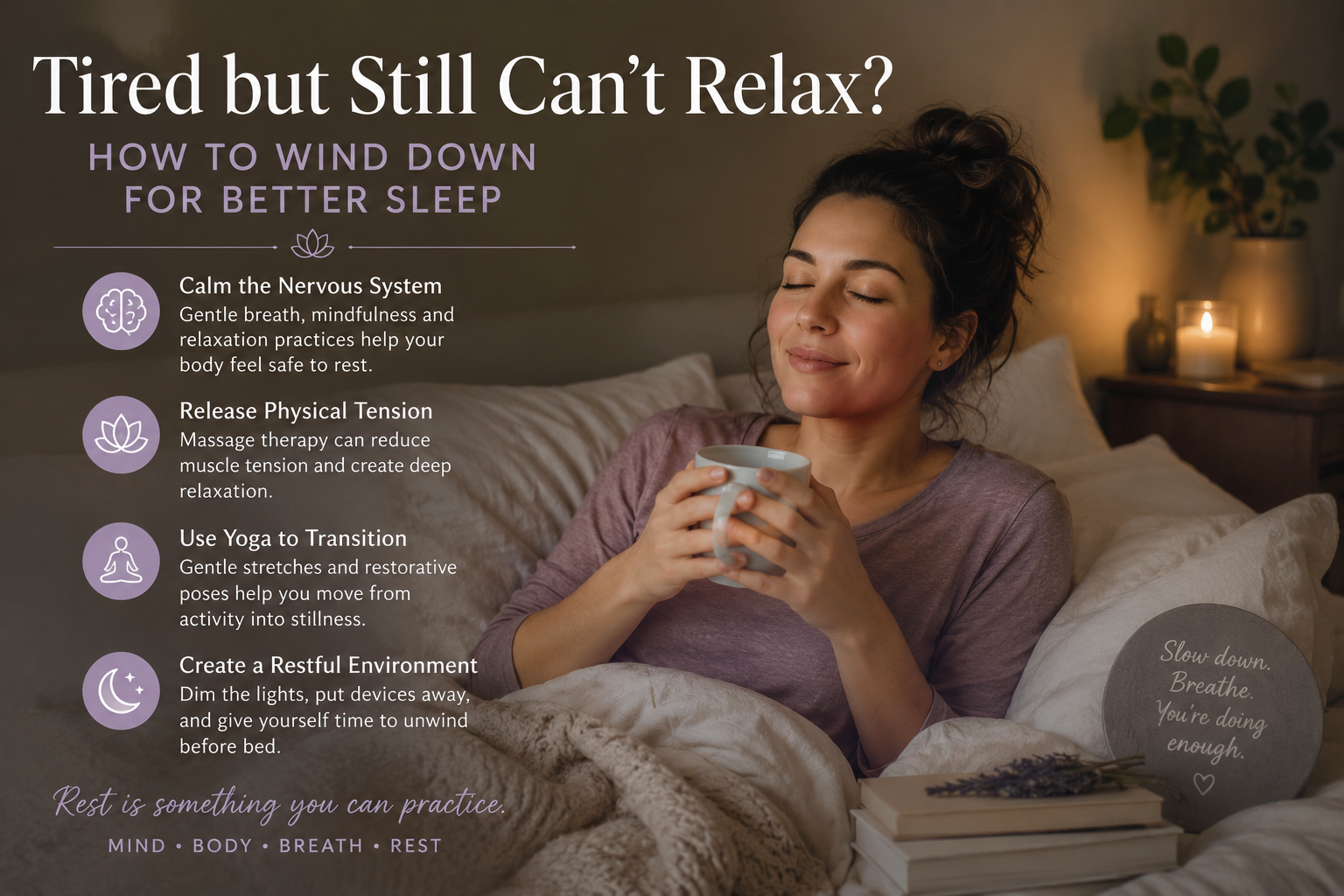
You can feel exhausted at the end of the day and still have difficulty relaxing.
I hear variations of this often. Someone may have had a long day, feel physically tired, and genuinely want to rest — yet the moment they finally stop moving, their mind is still busy and their body still feels tense.
Why does this happen?
One reason may be that being tired and being relaxed are not necessarily the same thing.
Your Body Doesn't Always Switch Off Immediately
Throughout the day, the nervous system continually responds to what is happening around us.
Work deadlines, driving, phones, emails, family responsibilities, financial concerns, exercise, noise, and simply trying to accomplish too much can keep us mentally and physically stimulated.
Our bodies are remarkably good at adapting to these demands.
The problem is that sometimes the stimulation continues right up until bedtime.
We finish working, answer one more message, watch television, check our phones, and then expect the body to immediately transition into deep relaxation.
For many people, that transition takes time.
Stress Can Become Physical
Stress isn't experienced only in the mind.
You may notice yourself tightening your shoulders, clenching your jaw, breathing more shallowly, holding your abdomen tense, or feeling generally restless.
Sometimes we don't even realize how much tension we're carrying until we finally become still.
This is one reason relaxation practices can be so valuable. They give us an opportunity to notice what the body has been doing all day and gradually allow some of that effort to soften.
Massage Therapy Can Create Space for Rest
One of the things I appreciate about massage therapy is that it provides something many people rarely give themselves: permission to stop.
There is nowhere to go, no phone to answer, no work to accomplish, and nothing that needs to be solved during the session.
Massage can help reduce muscular tension and create an environment that encourages relaxation.
Many people tell me that they feel profoundly relaxed after a massage. Some even fall asleep on the massage table.
That isn't necessarily because they suddenly became tired. They may have been tired all along.
They finally relaxed.
Yoga Can Help Us Practice the Transition
Yoga can also be useful because it teaches us how to consciously move from activity toward stillness.
A gentle evening practice doesn't need to be physically demanding.
Slow movements, comfortable stretches, restorative poses, breathing practices, and a few quiet minutes can become signals that the active portion of the day is ending.
Over time, the routine itself can become part of the transition toward rest.
Breathing Matters More Than We Sometimes Realize
When people think about yoga, they often think primarily about stretching.
But breathing practices are an important part of traditional yoga.
Simply slowing down and paying attention to the breath can change the experience of a quiet practice. Instead of trying to force yourself to relax, you are giving your attention something simple and steady.
For some people, a few minutes of comfortable, unforced breathing before bed feels much more natural than telling themselves, "I need to fall asleep."
Sleep cannot really be commanded.
We can, however, create better conditions for it.
Your Evening Environment Matters Too
Relaxation doesn't begin only when your head touches the pillow.
Consider what happens during the hour before you go to bed.
Bright screens, upsetting news, work emails, stimulating conversations, heavy meals, caffeine later in the day, and intense exercise close to bedtime may make winding down more difficult for some people.
Instead, you might experiment with creating a small transition period.
Dim the lights. Put the phone away. Take a warm shower or bath. Practice a few gentle yoga poses. Read something calming. Sit quietly for several minutes.
It doesn't have to become another complicated wellness routine.
Sometimes simplicity works beautifully.
Rest Is Something We Can Practice
Many of us have become very skilled at doing.
We work, exercise, take care of other people, manage homes, answer messages, solve problems, and move from one responsibility to another.
But relaxing is a skill too.
Massage therapy, gentle yoga, breathing practices, meditation, and quiet evening rituals can all provide opportunities to practice that transition from doing to simply being.
If you frequently find yourself thinking, "I'm exhausted, so why can't I relax?" it may be worth looking not only at how tired you are — but at how much opportunity your body has actually been given to slow down.
Sometimes the first step toward better rest isn't trying harder to sleep.
It's learning how to unwind.
Tone Jackson is a Licensed Massage Therapist and Certified Yoga Teacher with decades of experience in massage therapy, yoga, movement, and relaxation practices. Healthwork Yoga & Massage Therapy offers therapeutic massage and yoga services in Albuquerque, New Mexico.
Sources & Further Reading
1. NCCIH — Relaxation Techniques for Stress
This is probably the best overall match. It explains the body's stress response versus relaxation response and discusses breathing, focused attention, and other relaxation techniques.
5 Things to Know About Relaxation Techniques for Stress
2. NCCIH — Sleep Disorders and Complementary Health Approaches
Very appropriate for your sections about winding down, relaxation, yoga, breathing, and preparing for sleep. It also discusses avoiding caffeine, bright screens, large meals and strenuous exercise too close to bedtime.
Sleep Disorders and Complementary Health Approaches
3. CDC — Healthy Sleep Habits
This supports your practical advice about the evening environment: consistent sleep times, reducing electronic devices before bed, avoiding caffeine later in the day, and keeping the bedroom relaxing.
About Sleep — CDC
4. PubMed — Massage and Physiological Relaxation
This study is a particularly nice match for your statement that massage can create an environment that encourages relaxation. Researchers found increased subjective relaxation and decreased subjective stress following massage interventions.
Standardized Massage Interventions and Psychophysiological Relaxation