

Feeling Stressed or Anxious? Natural Ways to Help Your Body and Mind Relax
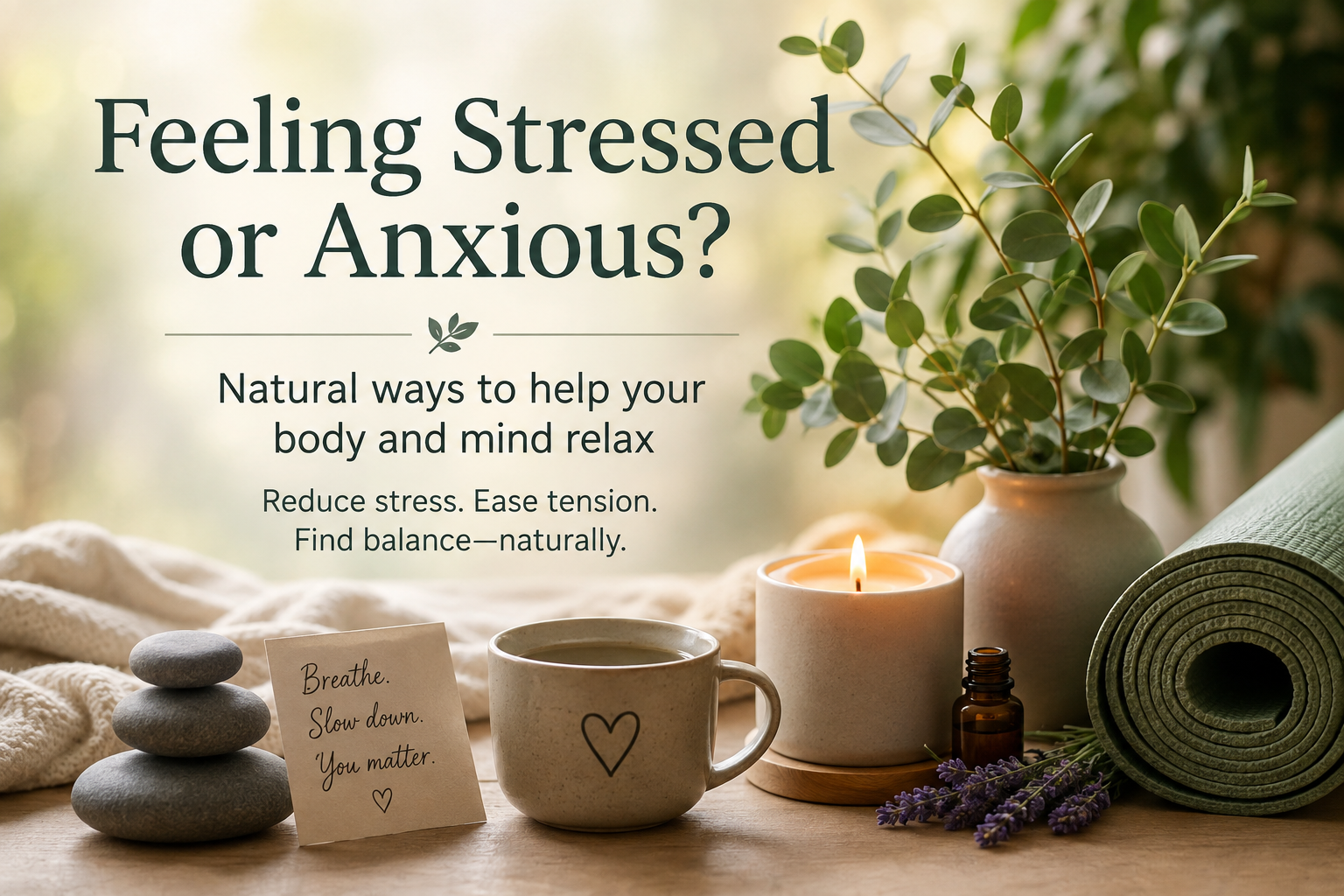
Stress has become such a normal part of everyday life that many people barely notice how much tension they are carrying until it begins affecting their sleep, mood, energy, or physical health.
One of the first questions I often hear from clients is:
"I feel stressed all the time. Is there anything natural I can do to help my body relax?"
The answer is yes.
While medications can be an important and appropriate treatment for many people, others are looking for natural ways to manage everyday stress, reduce muscle tension, improve sleep, and help their nervous system find a healthier balance. Often, these approaches can also complement the care recommended by a healthcare professional.
Understanding the Stress Response
Your body is designed to protect you from danger. When you encounter a stressful situation, your nervous system activates what is commonly known as the fight-or-flight response.
Your heart rate increases.
Your breathing becomes faster.
Your muscles tighten.
Stress hormones such as cortisol and adrenaline are released.
This response is extremely helpful during genuine emergencies.
The problem is that today's stressors rarely involve escaping physical danger. Instead, they may include work deadlines, financial concerns, family responsibilities, lack of sleep, constant notifications, or simply trying to keep up with a busy schedule.
When the body remains in this heightened state for days, weeks, or months, it often begins to show signs such as:
Tight shoulders and neck
Frequent headaches
Jaw clenching or teeth grinding
Low back pain
Digestive discomfort
Difficulty sleeping
Fatigue
Feeling overwhelmed
Increased muscle tension throughout the body
Your Nervous System Needs Opportunities to Reset
One of the most important things we can do is intentionally create moments during the day where the nervous system can shift away from "fight or flight" and into what is often called the rest-and-digest state.
This calmer state allows the body to:
Slow the heart rate
Relax muscles
Improve digestion
Lower stress hormones
Support better sleep
Promote healing and recovery
While no single technique works for everyone, many people benefit from combining several healthy habits.
Natural Ways to Reduce Stress
Massage Therapy
Massage therapy is much more than simply working on sore muscles.
Many people notice that during a massage their breathing slows, their shoulders begin to soften, and their mind becomes noticeably quieter.
Research suggests massage therapy may help reduce stress, ease muscle tension, improve relaxation, and contribute to an overall sense of well-being. For many people, it becomes an important part of maintaining both physical and emotional health.
Gentle Yoga
Yoga combines movement with mindful breathing.
Rather than focusing on difficult poses, gentle yoga encourages awareness of how the body feels, improves mobility, and helps release physical tension that often accompanies stress.
Even ten to fifteen minutes of gentle stretching can make a noticeable difference.
Deep Breathing
Stress often causes us to breathe quickly and shallowly without realizing it.
Taking a few slow, controlled breaths can send calming signals to the nervous system.
Try this simple exercise:
Inhale slowly through your nose for four seconds.
Exhale gently through your nose for six seconds.
Repeat for two to five minutes.
Many people notice their shoulders relaxing before they even finish.
Spending Time Outdoors
A short walk outside can be surprisingly effective.
Fresh air, sunlight, trees, and natural surroundings often help interrupt the constant mental activity that builds throughout the day.
Even fifteen to twenty minutes can leave many people feeling calmer and more refreshed.
Prioritizing Sleep
Poor sleep and stress often create a cycle that feeds itself.
The more stressed we become, the harder it can be to sleep.
The less we sleep, the more reactive our nervous system becomes.
Creating a consistent bedtime routine, reducing screen time before bed, and allowing yourself time to unwind can all support better sleep.
Regular Physical Activity
Exercise helps the body use the energy created by stress hormones.
Whether it is walking, swimming, strength training, hiking, or yoga, regular movement is one of the most effective long-term tools for managing everyday stress.
There Is No "Perfect" Way to Relax
Some people find relief through massage therapy.
Others enjoy yoga, meditation, hiking, reading, gardening, spending time with pets, or simply sitting quietly with a cup of tea.
The important thing is finding healthy habits that help your nervous system regularly shift out of survival mode and into a calmer, more balanced state.
Small daily practices often produce greater long-term benefits than waiting until stress becomes overwhelming.
When to Seek Additional Help
If stress or anxiety begins interfering with your work, relationships, sleep, or daily life, it is important to speak with a qualified healthcare professional. Sometimes additional evaluation, counseling, medication, or other treatments may be appropriate.
Natural approaches can be valuable tools, but they should not replace professional medical or mental health care when it is needed.
A Final Thought
Stress is part of life, but living in a constant state of tension doesn't have to be.
Giving yourself permission to slow down, breathe deeply, move your body, and care for your nervous system is not a luxury—it is an investment in your long-term health and well-being.
If you have been feeling overwhelmed, tense, or exhausted, consider making relaxation part of your regular wellness routine rather than something you only do when you reach your breaking point.
Sometimes the smallest changes, practiced consistently, can make the biggest difference.
About the Author
Tone Jackson is a Licensed Massage Therapist and Certified Yoga Teacher with more than 30 years of experience helping people reduce pain, improve mobility, and restore balance through therapeutic massage and yoga. Through the Healthwork Yoga & Massage Therapy blog, she shares practical information to help people better understand their bodies and make informed decisions about their health and well-being.
Have questions or would like to schedule an appointment? I'd be happy to help. Call today to learn more about massage therapy, private yoga instruction, or to schedule a session — (505) 235-8032
Sources & Further Reading
1. NCCIH — Stress
This is probably the best overall source for the article. It covers the stress response and research on approaches including breathing, relaxation techniques, meditation and yoga.
Stress — National Center for Complementary and Integrative Health (NCCIH)
2. NCCIH — Mind and Body Approaches for Stress and Anxiety
Excellent support for your sections on relaxation, breathing, yoga and other mind-body approaches. NCCIH also appropriately distinguishes everyday stress management from treatment for an anxiety disorder.
Mind and Body Approaches for Stress and Anxiety: What the Science Says
3. NCCIH — Massage Therapy
This supports the massage portion while keeping the claims appropriately cautious. Research suggests potential benefits for relaxation and anxiety in some populations, but massage shouldn't be presented as a treatment for anxiety disorders.
6 Things to Know About Massage Therapy for Health Purposes
4. CDC — Benefits of Physical Activity
A very good source for your section recommending regular movement. The CDC notes that physical activity can reduce short-term feelings of anxiety, improve sleep, and provide longer-term mental and physical health benefits.
Benefits of Physical Activity — CDC