

Severe Pain After an Accident? Why Medical Evaluation Should Come Before Massage Therapy
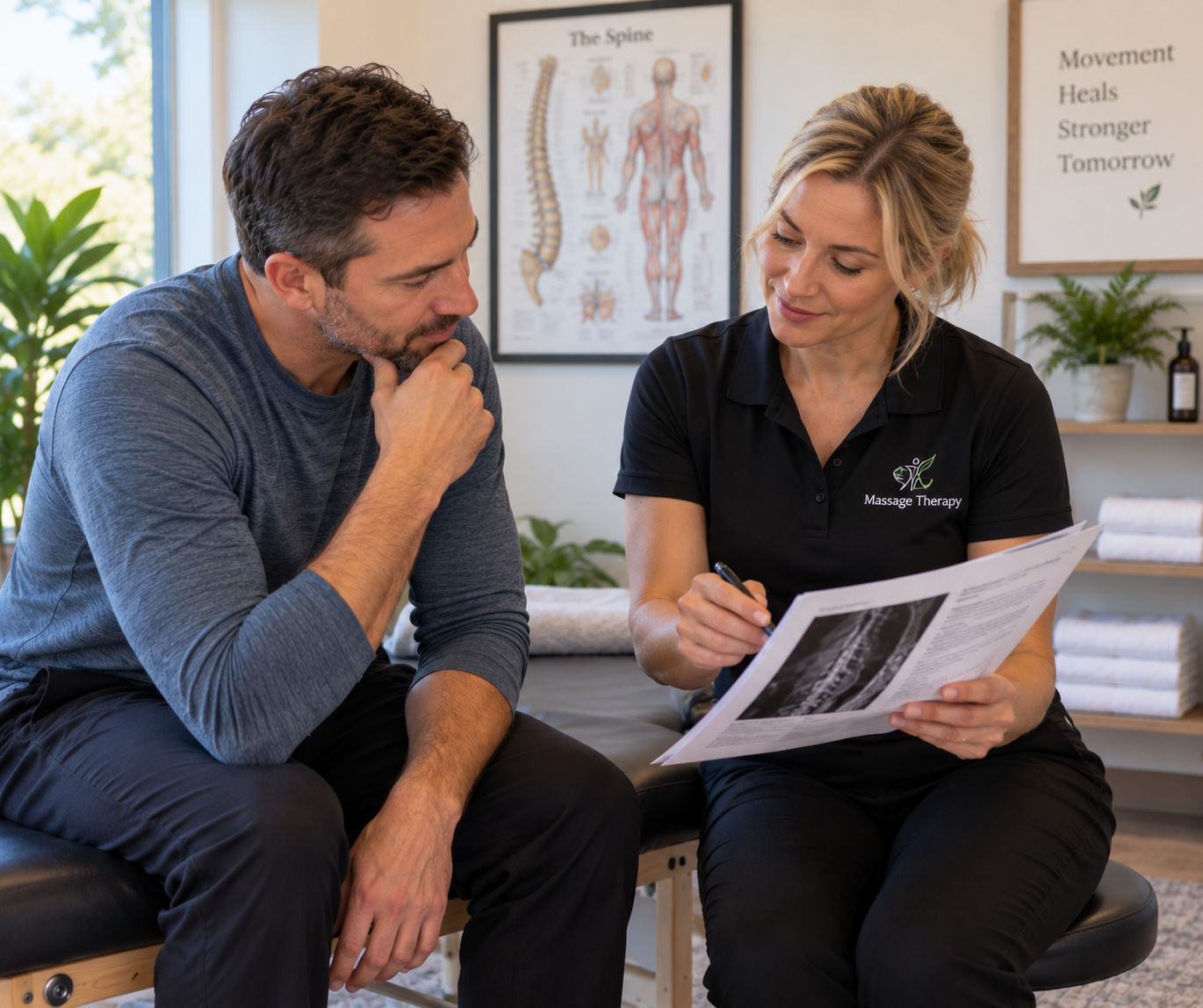
Clinical massage therapist reviewing an MRI report with a client experiencing pain after an accident in Albuquerque, New Mexico.
Massage therapy can be an important part of managing muscular pain, restricted movement, and soft-tissue dysfunction. But there are times when massage should not be the first step.
If you are experiencing severe or unexplained pain—especially following a car accident, fall, sports injury, or other trauma—it is important to seek appropriate medical evaluation before scheduling massage therapy.
Pain is a symptom. While massage therapists are trained to assess and treat soft-tissue dysfunction, severe pain can sometimes have causes that require medical diagnosis, imaging, or other medical treatment before massage is appropriate.
At Healthwork Yoga & Massage Therapy in Albuquerque, we believe that good clinical massage therapy begins with knowing when massage may help—and when a client should see a medical professional first.
Severe Pain Is Your Body Telling You Something
Muscle strains, tight fascia, trigger points, and other soft-tissue problems can certainly cause significant pain. But pain can also occur with fractures, disc injuries, ligament injuries, nerve involvement, internal injuries, or other conditions that cannot be identified by massage therapy assessment alone.
This becomes especially important when pain begins after trauma.
For example, the American College of Radiology's criteria for acute spinal trauma identify factors such as neurological deficits, spinal tenderness and dangerous injury mechanisms as considerations in determining whether spinal imaging is appropriate following trauma.
The National Library of Medicine's MedlinePlus also advises seeking medical attention for back pain following a severe blow or fall and for symptoms such as weakness, numbness, difficulty walking, loss of bladder or bowel control, or severe pain that prevents a person from becoming comfortable.
For these reasons, severe pain following an accident should not automatically be assumed to be muscular.
After an Accident, Medical Evaluation Should Come First
If you have recently been involved in a motor vehicle accident, experienced a significant fall, suffered a substantial sports injury, or experienced another form of physical trauma and now have severe pain, consider seeing an appropriate medical professional before receiving massage.
Depending on the circumstances, a medical professional may perform a physical examination and determine whether diagnostic testing such as an X-ray, MRI, CT scan, or another test is appropriate.
This is important because massage therapists do not diagnose fractures, disc injuries, neurological disorders, internal injuries, or diseases.
In fact, New Mexico law specifically defines massage therapy as a health care service involving treatment of soft tissues for therapeutic purposes, primarily comfort and relief of pain. The law also states that massage therapy does not include the diagnosis or treatment of illness or disease.
At the same time, New Mexico's scope of practice permits licensed massage therapists to assess soft-tissue structures and treat and help prevent physical dysfunction and pain involving soft tissue.
That distinction is important.
A massage therapist can assess and work with muscles and other soft tissues within the massage therapy scope of practice. A massage therapist should not attempt to replace the medical professional responsible for diagnosing an injury or medical condition.
What Does the American Massage Therapy Association Say?
The American Massage Therapy Association (AMTA) has addressed this issue specifically when discussing massage therapy for acute and chronic pain.
In its Massage Therapy Journal, AMTA discusses the importance of determining whether a person with an acute injury has been evaluated by a doctor. The article explains that physician referral together with relevant tests or X-rays can help reduce the risk of causing additional harm to an injury that may not otherwise be apparent.
That is particularly relevant following an accident.
A person may feel that the problem is simply a tight neck, painful shoulder, or sore lower back. But without appropriate medical evaluation, neither the client nor the massage therapist necessarily knows what structures may have been injured.
If You Had an X-Ray or MRI, Consider Bringing the Written Report
Once you have received medical evaluation and have been advised that massage therapy is appropriate, there is another step that can be very helpful:
If diagnostic imaging was performed, consider bringing a copy of the written radiology report to your clinical massage therapist.
We are referring to the written report, not necessarily the actual X-ray or MRI images.
A radiology report contains the findings documented by the medical professional who interpreted the imaging. For a massage therapist working with a client after medical evaluation, relevant information in that report may provide useful background when planning a conservative soft-tissue treatment.
For example, it may identify the location of an injury or other findings that could influence positioning, pressure, stretching, range-of-motion work, or whether an area should be avoided.
However, bringing a medical report to a massage therapist does not mean that the massage therapist is diagnosing you or independently interpreting your MRI or X-ray.
The medical diagnosis and interpretation of diagnostic imaging remain within the appropriate licensed medical professional's scope of practice.
The report is supporting information that may help the massage therapist understand the medical findings already documented and work more safely within the massage therapist's own scope of practice.
Are You Allowed to Give Your MRI or X-Ray Report to a Massage Therapist?
Yes. Your medical information belongs to you in the sense that federal law gives you broad rights to access it and decide to share it.
Under the federal HIPAA Privacy Rule, with limited exceptions, patients have the right to access copies of medical information maintained in their medical records. The U.S. Department of Health and Human Services specifically states that this right includes medical records, laboratory reports, X-rays and other diagnostic images.
HHS also explains that patients may share their health information with others and, subject to applicable requirements, can request that health information be provided to a person or entity they designate.
Therefore, a client may obtain their medical or imaging report and voluntarily provide a copy to their massage therapist.
Why We Prefer the Written Report
For clinical massage therapy, we recommend bringing the written radiology report rather than expecting a massage therapist to examine raw MRI or X-ray images.
There is an important reason for this.
Radiologists and other qualified medical professionals have specialized training in interpreting diagnostic imaging. Massage therapists do not replace those professionals.
The written report gives the massage therapist access to relevant information that has already been evaluated and documented by the appropriate medical professional.
This helps maintain a clear professional boundary:
The medical professional diagnoses. The massage therapist uses relevant medical information to help make appropriate decisions within the massage therapy scope of practice.
New Mexico Massage Therapists Are Expected to Refer When Appropriate
Referral is not simply a matter of personal preference.
New Mexico's professional conduct rules state that licensed massage therapists must limit their practice to areas in which they have competence through education, training and experience and refer clients to other health professionals when appropriate.
The rules also require massage therapists to acknowledge the limitations of massage therapy and its contraindications.
This is one reason a responsible massage therapist may occasionally tell a client:
“Before I work on this, I would like you to have this evaluated by a medical professional.”
That doesn't mean massage therapy cannot ultimately help. It means that client safety comes before performing a treatment.
When Should You Seek Medical Attention Before Massage?
Medical evaluation should be considered when pain is severe, unexplained, dramatically different from your usual pain, or begins following significant trauma.
Particular caution is appropriate following:
A motor vehicle accident
A significant fall
A direct blow or other traumatic injury
A suspected fracture
A head, neck or spinal injury
New weakness or numbness
Difficulty walking or maintaining balance
Loss of bladder or bowel control
Severe pain that does not allow you to become comfortable
Significant swelling or rapidly worsening symptoms
Some symptoms require urgent or emergency medical attention rather than a massage appointment. MedlinePlus identifies sudden severe pain, serious injuries from motor vehicle accidents, neck or spinal injuries accompanied by loss of sensation or movement, and other serious symptoms as reasons to seek emergency care.
If you believe you may be experiencing a medical emergency, call 911 or seek emergency medical care.
Medical Care and Clinical Massage Therapy Can Complement Each Other
Seeking medical care first does not mean that massage therapy has no place in recovery.
Quite the opposite.
Once serious injuries and medical contraindications have been appropriately evaluated, clinical massage therapy may become part of a broader recovery plan for appropriate soft-tissue problems.
Medical professionals and massage therapists have different scopes of practice and different roles.
A physician or other appropriate medical professional can diagnose medical conditions, order diagnostic imaging when indicated, and determine whether additional medical treatment is necessary.
A licensed massage therapist can assess soft tissues within the massage therapy scope of practice and use appropriate manual techniques to address soft-tissue pain, muscular tension, restricted movement and physical dysfunction.
When those roles are respected, the client benefits from a more informed approach to care.
A Note From Healthwork Yoga & Massage Therapy
At Healthwork Yoga & Massage Therapy, we take pain seriously.
If you are experiencing severe pain following an accident or significant injury and have not yet been medically evaluated, we may recommend that you see an appropriate medical professional before receiving massage therapy.
If you have already been evaluated and diagnostic imaging such as an X-ray or MRI was performed, you are welcome to bring the written report with you to your appointment.
The report is not used to diagnose you. Instead, relevant findings may help provide additional background when determining whether and how massage therapy can appropriately be performed within our professional scope of practice.
Sometimes the safest and most responsible massage treatment begins with knowing when not to massage.
Clinical Massage Therapy in Albuquerque, New Mexico
If you have been medically evaluated and are looking for clinical or therapeutic massage for soft-tissue pain and dysfunction, Healthwork Yoga & Massage Therapy provides individualized massage therapy in Albuquerque, New Mexico.
Treatment is based on your history, symptoms, soft-tissue assessment, comfort, and any relevant information you choose to provide from your medical evaluation.
Healthwork Yoga & Massage Therapy
Albuquerque, New Mexico
This article is provided for general educational purposes and is not medical advice or a substitute for evaluation, diagnosis, or treatment by a qualified healthcare professional.
Medical, Legal & Professional Sources
New Mexico State Records Center & Archives (SRCA) — New Mexico Administrative Code, Massage Therapy Professional Conduct
16.7.2 NMAC — Professional ConductNew Mexico Regulation & Licensing Department — Massage Therapy Board — New Mexico massage therapy scope of practice and licensing information
New Mexico Massage Therapy BoardAmerican Massage Therapy Association (AMTA) — Professional discussion of massage therapy for acute and chronic pain, including medical evaluation of acute injuries
Massage for Acute and Chronic Pain — AMTAU.S. Department of Health & Human Services (HHS) — HIPAA guidance regarding patients' rights to access copies of their health information
Individuals' Right Under HIPAA to Access Their Health InformationAmerican College of Radiology (ACR) — Evidence-based medical imaging guidance for acute spinal trauma
ACR Appropriateness Criteria — Acute Spinal TraumaMedlinePlus — U.S. National Library of Medicine — Patient information about back pain and circumstances in which medical attention may be appropriate
Back Pain — When to See a Medical Professional