

How to Prepare for a Massage Therapy Session—and What to Do Afterwards for the Best Results
How to Prepare for a Massage Therapy Session—and What to Do Afterwards for the Best Results
A massage therapy session doesn't begin when you lie down on the table—it begins with how you prepare beforehand. Likewise, the benefits of your massage don't end when you leave the office. What you do during the next several hours—and sometimes the next day or two—can influence how your body responds to treatment.
Here are some simple guidelines I often share with my clients to help them get the most out of their massage therapy session.
Before Your Massage Therapy Session
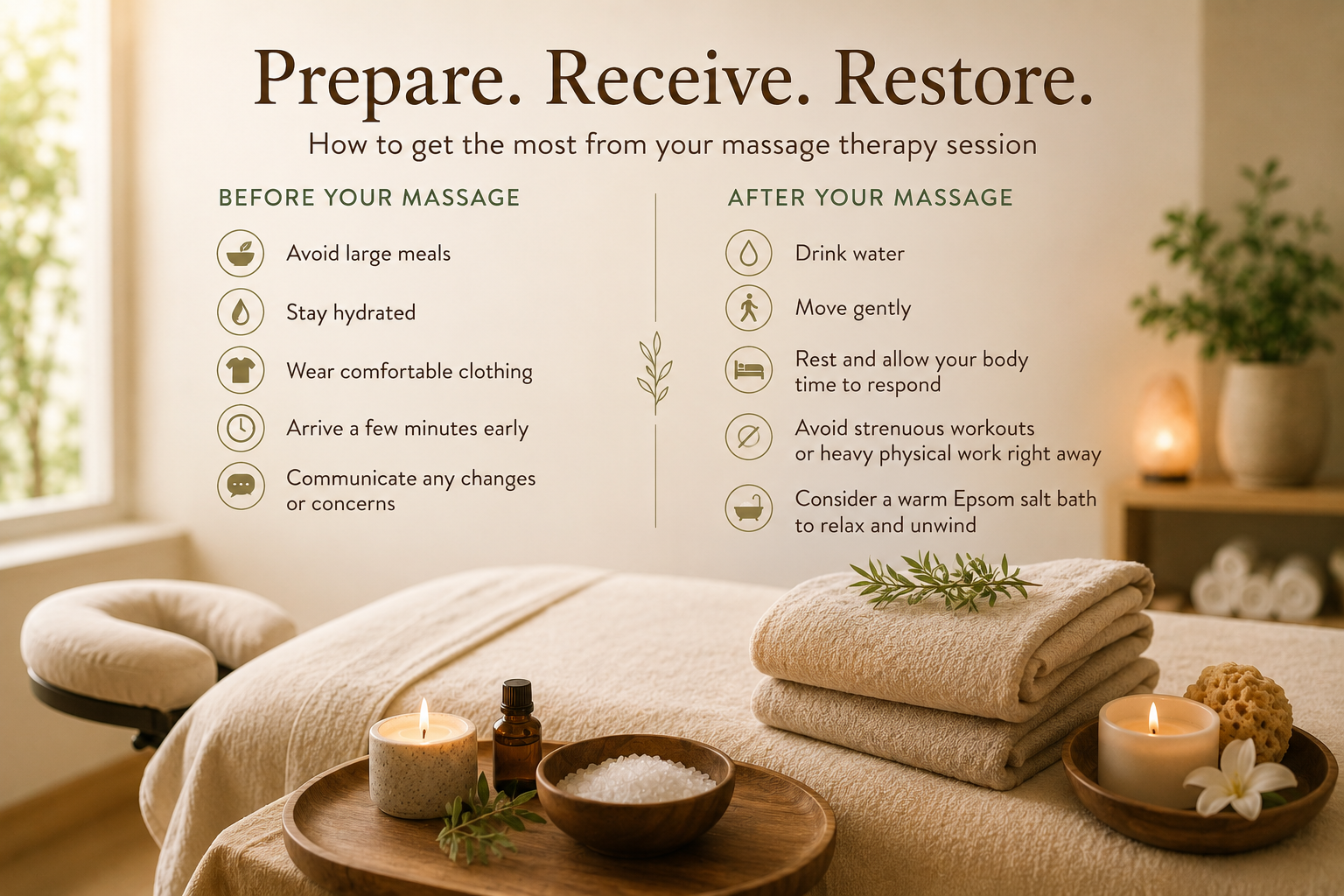
Avoid Eating a Large Meal
It's perfectly fine to have a light snack before your appointment, but I generally recommend avoiding a heavy meal within an hour or two of your massage.
Lying face down with a full stomach can be uncomfortable, and digestion naturally requires blood flow and energy. Arriving neither hungry nor overly full often makes for a much more comfortable experience.
Stay Hydrated
Being well hydrated helps your muscles and connective tissues function more efficiently. Try drinking water throughout the day rather than waiting until just before your appointment.
Wear Comfortable Clothing
Choose clothing that's easy to change in and out of, especially if you're receiving treatment for the neck, shoulders, hips, or lower back.
Arrive a Few Minutes Early
Giving yourself a few extra minutes to settle in helps shift your mind from the busyness of the day into a calmer, more relaxed state.
Tell Your Massage Therapist What's Changed
Has your pain moved? Have you started a new exercise routine? Been gardening all weekend? Had an injury or a stressful week?
Even small changes can help guide your treatment.
After Your Massage Therapy Session
Give Your Body Time to Respond
Massage therapy encourages muscles and connective tissues to relax and move more freely.
Whenever possible, try not to rush immediately into activities that heavily stress the same areas that were just treated.
If you've received a deeper therapeutic massage, you may benefit from taking it a little easier for the remainder of the day. Depending on the intensity of your treatment and your individual situation, some people also find it helpful to delay strenuous exercise or heavy physical work until the following day—or even up to 48 hours after more intensive sessions. Your massage therapist can help guide you based on your specific treatment.
Keep Moving—Gently
Gentle walking, light stretching (if recommended), and normal daily movement can help maintain mobility without placing excessive stress on recently treated tissues.
Continue Drinking Water
There's no need to force excessive amounts of water after a massage, but staying normally hydrated supports your body's everyday recovery processes.
Listen to Your Body
Some people feel energized after a massage, while others feel deeply relaxed and even sleepy.
Both responses can be perfectly normal.
If your body is asking for a little extra rest, try to honor that whenever possible.
Notice How You Feel
Pay attention to how your body responds over the next day or two.
You may notice improved range of motion, easier movement, reduced pain, or perhaps areas that still need attention during your next session.
This information helps guide future treatments.
Consider a Warm Epsom Salt Bath
If it's appropriate for your health and your healthcare provider hasn't advised against it, a warm bath with Epsom salts later in the day or that evening can be a wonderful way to continue relaxing after your massage.
The warmth of the water may help muscles continue to relax, improve your sense of well-being, and encourage you to slow down and unwind. Many people also enjoy adding Epsom salts (magnesium sulfate) to the bath because they find it soothing after a therapeutic massage or a physically demanding day.
While scientific evidence that magnesium is absorbed through the skin is limited, many individuals report that a warm Epsom salt bath helps them feel more relaxed and comfortable. Whether those benefits come from the warmth of the water, the quiet time, the Epsom salts themselves, or a combination of these factors, it can be a pleasant way to extend the calming effects of your massage.
A warm bath may not be appropriate for everyone. If you have certain medical conditions—such as uncontrolled heart disease, severe circulatory problems, open wounds, active skin infections, or if your healthcare provider has advised you to avoid hot baths—it's best to follow their guidance. If you're unsure whether a warm bath is appropriate for you, ask your healthcare provider.
A Massage Is Part of the Healing Process
I often remind my clients that massage therapy isn't simply something that happens during the hour you're on the table.
The choices you make before and after your appointment can influence how long the benefits last.
Preparing well, allowing your body time to adapt, staying active in healthy ways, and following any individualized recommendations from your massage therapist can all help you get the greatest benefit from your treatment.
My goal is always to help you leave feeling better—and to help those improvements last as long as possible.
About the Author
Tone Jackson is a Licensed Massage Therapist and Certified Yoga Teacher with more than 30 years of experience helping people reduce pain, improve mobility, and restore balance through therapeutic massage and yoga. Through the Healthwork Yoga & Massage Therapy blog, she shares practical information to help people better understand their bodies and make informed decisions about their health and well-being.
Have questions or would like to schedule an appointment? I'd be happy to help. Call today to learn more about massage therapy, private yoga instruction, or to schedule a session — (505) 235-8032
Sources & Further Reading
1. National Center for Complementary and Integrative Health (NCCIH) — Massage Therapy
This is the strongest general source for the article. It discusses massage therapy, safety, health conditions that may require additional precautions, and the importance of communicating with qualified health professionals.
Massage Therapy: What You Need to Know — NCCIH
2. Cleveland Clinic — Soreness After Massage
This is particularly useful for your after-massage section. It discusses why some people experience soreness following massage, especially deeper work, and addresses hydration and recovery afterward.
Why Do I Feel Sore After a Massage? — Cleveland Clinic
3. NCCIH — Massage Therapy for Health Purposes
This supports your advice about making sure massage is appropriate for the individual, particularly when someone has an existing medical condition or is receiving more intensive massage.
6 Things to Know About Massage Therapy for Health Purposes — NCCIH